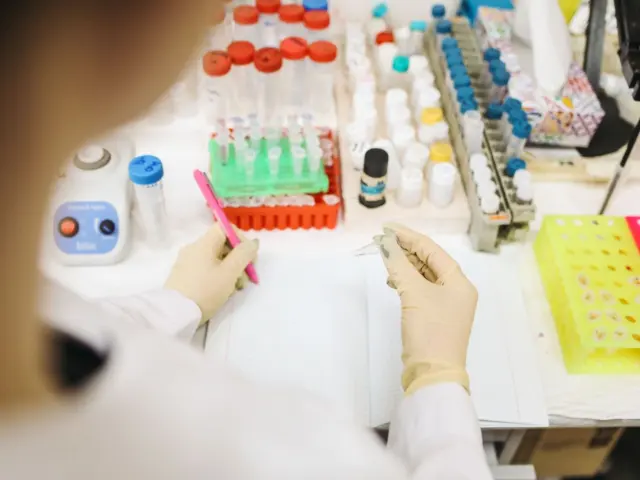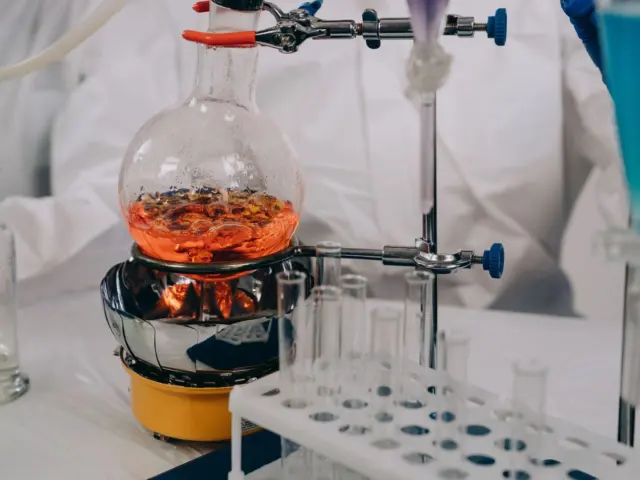
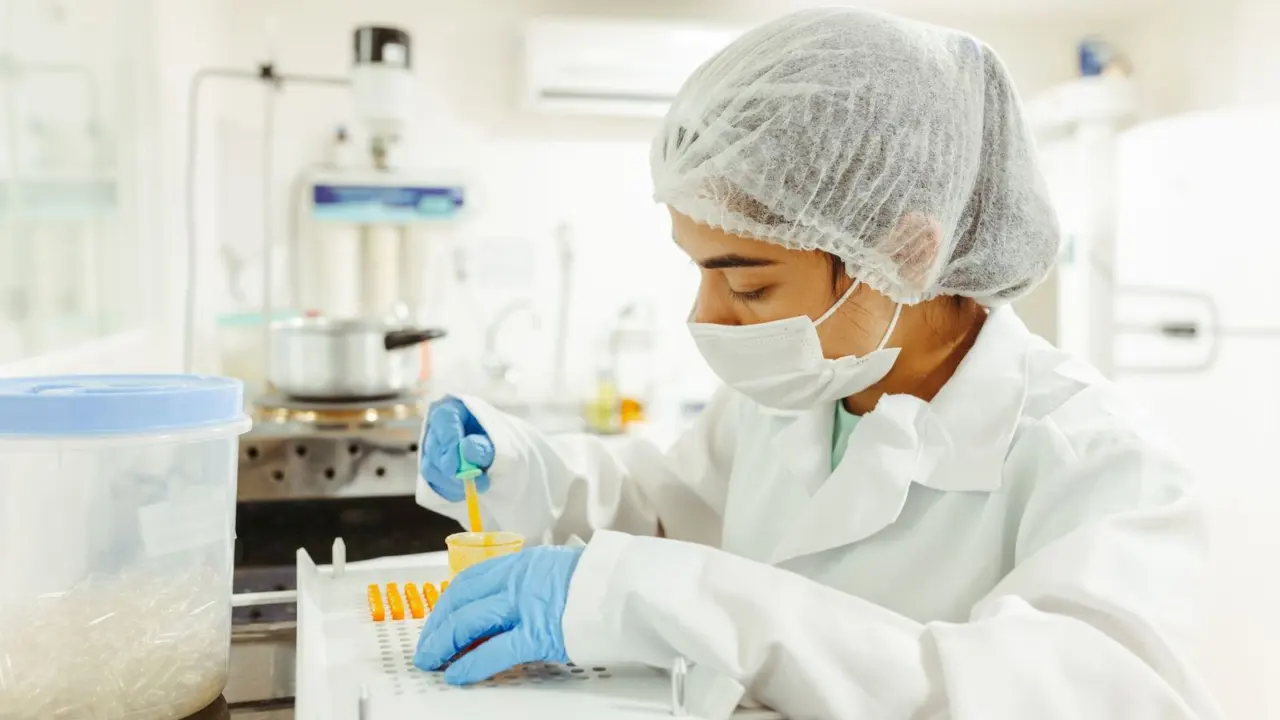
Wondering what is drug discovery? It is the early research stage where scientists pick a disease target, search for molecules that act on it, and refine them into a candidate worth testing carefully in people.
| Item | Value |
|---|---|
| Clinical trial entries analysed in one large study | 406 038 entries |
| Compounds covered by that study | over 21 143 compounds |
| Lowest overall success rate, by disease area (oncology) | 3.4% |
| Highest overall success rate, by disease area (vaccines for infectious disease) | 33.4% |
| Phase II failures attributed to lack of efficacy | 59% |
| Phase III and later failures attributed to safety issues | 35% |
Figures come from the Wong and Siah analysis of clinical trial success rates and a Nature Reviews Drug Discovery attrition analysis. They can change as new data appear, so check the sources before you rely on them.
What drug discovery means in plain terms
Drug discovery is the research phase that comes before a medicine is tested in people. Scientists try to understand a disease, choose a biological handle on it, and look for molecules that might influence that handle in a useful way.
It is only the first part of a longer journey. The later parts, such as animal safety work, human trials and regulatory review, are covered in our guide to the drug development process stages.
It helps to think of discovery as a funnel. Many ideas and very large numbers of molecules go in, and very few come out as a candidate that researchers consider worth the cost and risk of human testing.
This site is an independent educational resource. It explains how the science and industry work, and it does not give medical advice or say that any named drug or company works or is better than another.
Who carries out discovery
Discovery happens in universities, government laboratories, hospitals, small biotechnology firms and large pharmaceutical companies. Academic groups often contribute the underlying disease biology, while companies tend to run the large, expensive screening and chemistry programmes.
Many projects change hands along the way. A university lab may publish a promising target, a start-up may build a molecule against it, and a larger organisation may later fund the human trials.
The people involved span many fields:
- Biologists who study disease mechanisms and build assays.
- Medicinal chemists who design and make molecules.
- Pharmacologists and toxicologists who study how a molecule behaves in living systems.
- Data scientists and computational chemists who model and analyse results.
- Clinicians who advise on what patients actually need.
Where discovery sits in the wider pipeline
Discovery overlaps with, but is not the same as, development. In common usage, discovery covers the work up to a nominated candidate, and development covers everything needed to bring that candidate to patients.
The NIDDK’s translational research pages lay the early pipeline out as a chain of steps. In its description, the sequence runs:
- Disease biology and target identification.
- Assay development.
- Screening to find hits.
- Hit to lead.
- Lead optimization.
- A preclinical candidate that moves into preclinical development.
After that come human studies. If you want the trial side in detail, see our clinical trial phases explained guide.
Our pages on the fda drug approval process and the ema drug approval process describe regulatory reviews for the United States and Europe.
The main stages of drug discovery
Real projects rarely move in a neat line. Teams loop back, drop targets, restart screens and run several stages in parallel, but the order below is a useful map.
Stage one: choosing and validating a target
A target is usually a protein or other molecule that appears to play a role in a disease. Researchers draw on laboratory biology, patient samples, genetics and published studies to suggest which targets might matter.
Validation asks a harder question: if you change this target, does the disease biology change in a meaningful way? Typical approaches include:
- Switching a gene off or down in cells or animal models and watching what happens.
- Comparing the target in healthy and diseased tissue.
- Looking at human genetic evidence linking the target to a condition.
- Checking whether altering the target could plausibly cause harm elsewhere in the body.
Because the biology behind many diseases is only partly understood, target choice is as much a scientific judgement as a measurement. Different teams can look at the same evidence and reach different conclusions.
Stage two: building assays and finding hits
Once a target is chosen, scientists need a way to measure whether a molecule affects it. That measurement tool is an assay, and a good one is reliable, repeatable and practical to run very many times over.
Assays come in two broad families. Biochemical assays use purified proteins in a tube, while cell-based assays watch a living cell for a change such as a signal turning on or off.
A hit is a molecule that shows the wanted activity in the assay. Hits are often weak, impure, or active for the wrong reasons, so they are retested before anyone gets excited.
Screening large compound libraries
Companies and academic centres keep collections of chemical compounds that can be tested in bulk. Automation, robots and miniaturised plates allow very large numbers of tests in a short time, an approach explained in our page on high throughput screening.
Screens produce false positives, such as compounds that interfere with the readout rather than act on the target. Follow-up experiments are designed to weed those out.
Other ways to find starting points
Screening is not the only route. Teams also use these approaches:
- Fragment-based design: testing very small molecules and growing or joining them.
- Structure-based design: using the three-dimensional shape of a target to design molecules that fit.
- Phenotypic screening: looking for any change in a cell or organism without committing to one target first.
- Biologic approaches: engineering antibodies or other protein-based molecules instead of small chemicals.
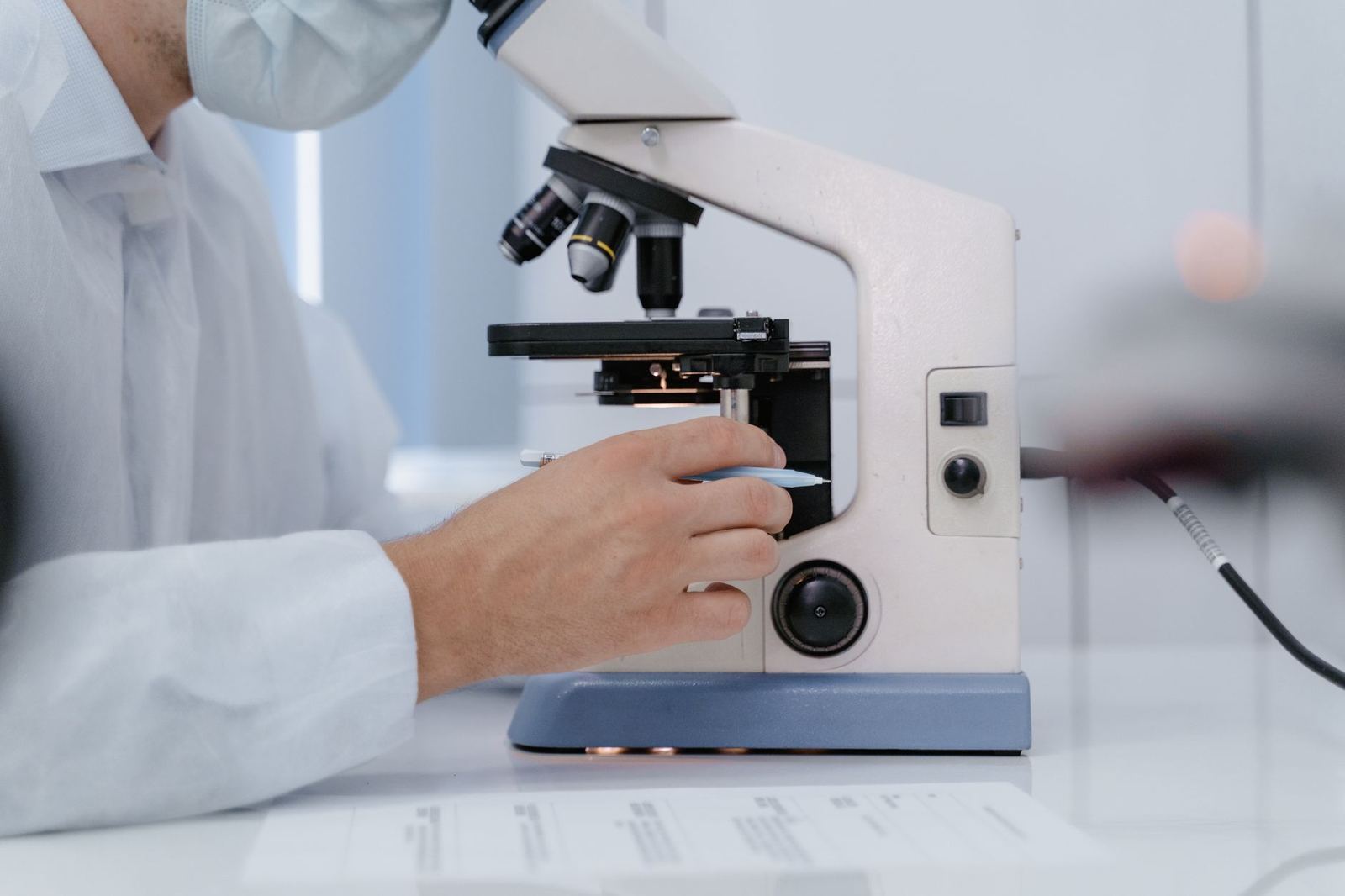
Microscopy is increasingly used in phenotypic work, because images can capture many features of a cell at once. Our overview of cell imaging in drug discovery explains the idea.
Stage three: from hit to lead to candidate
A hit is rarely a drug. The next phase improves it, and our page on hit to lead optimization covers this step in depth.
In hit-to-lead work, chemists make close variants of a hit and test them, looking for a lead series with better activity and fewer obvious problems. The NIDDK describes lead optimization as improving properties such as potency, efficacy, selectivity or bioavailability, and says it typically involves generating and testing multiple new agents.
The same NIDDK page notes that lead optimization is expected to include assessment of efficacy in animal models or in human samples studied outside the body.
Properties chemists try to balance include:
- Potency: how much of the molecule is needed to have an effect.
- Selectivity: whether it avoids unintended targets.
- Absorption and metabolism: whether the body can take it up and how fast it is cleared.
- Safety signals: early signs of toxicity in cells or animals.
- Manufacturability: whether it can be made consistently at scale.
When one molecule meets enough of these goals, the team may nominate it as a preclinical candidate. That is a decision to invest in formal safety studies, not a statement that the molecule will help anyone.
The handoff to preclinical work
The NIDDK pipeline places preclinical development after lead optimization and before the clinic.
This is where discovery ends and development begins, although the line is blurry. Chemists may keep refining back-up molecules while the lead candidate is being tested, in case the first choice runs into trouble.
It is also the point where intellectual property, manufacturing and funding questions become pressing. A scientifically interesting molecule that cannot be made reliably, or protected, or paid for, may stall even if the early data look good.
Why the early stages take so long
Each stage depends on the one before it, and an error early on can waste years of later effort. A poorly designed assay can send chemists chasing misleading signals, and a weak target can sink an otherwise elegant molecule.
Teams therefore build in decision points, sometimes called go or no-go gates. At each gate, a group reviews the evidence and decides whether to continue, change direction or stop.
Stopping early is not a failure of the process. It is usually the cheapest and most responsible place for a doubtful project to end.
How computers and AI fit in
Computational tools have been used in discovery for decades. Examples include docking, which predicts how a molecule might sit in a target, and models that estimate properties such as solubility.
Our companion guide, how ai is used in drug discovery, goes through the methods and their limits.
Computational predictions still need laboratory confirmation. A model is only as good as the data it learned from, and biology often behaves differently from what data in the past suggest.
Discovery also sits within the broader field of biotechnology, which we introduce in what is biotechnology. That page explains how living systems and cells are used to make products, including some medicines.
Data quality is a recurring theme. Results from different laboratories are often measured in different ways, stored in different formats and published selectively, which makes it hard to train models that generalise well.
Negative results are especially scarce in the literature. Because failed experiments are rarely written up, a model may see an overly optimistic picture of what works, and human reviewers need to keep that bias in mind.
For these reasons, many teams treat computational methods as one input among several. Experienced scientists still weigh the biology, the chemistry and the practical constraints before deciding which molecule to carry forward.
What the failure rates tell us
Most candidates that start human testing do not reach approval. A study in the journal Biostatistics used 406 038 clinical trial entries covering over 21 143 compounds from 2000 to October 2015, and reported that overall success varied widely by disease area.
The authors report a range from a minimum of 3.4% for oncology to a maximum of 33.4% for vaccines for infectious disease. They also found that trials using biomarkers to select patients had higher overall success probabilities than those without, though the data cannot show that biomarkers alone cause this.
Numbers like these depend on the dataset, the period and how success is defined. Treat them as a rough sense of scale, not a forecast for any one project.
Why candidates fail
A Nature Reviews Drug Discovery analysis of Phase II and Phase III attrition looked at the reasons projects stopped. For its most recent year range, it reported that lack of efficacy accounted for 59% of Phase II failures and 52% of Phase III and later failures.
The same analysis found that safety issues accounted for 35% of failures in Phase III and beyond, against 22% in Phase II. The authors suggest this may be because some safety problems only become apparent in larger numbers of patients or longer trials.
The patterns are examined in more detail in why do drugs fail in clinical trials.
What discovery can and cannot do
Discovery can narrow a huge field of possibilities into a short list of molecules with a reasoned scientific rationale. It can also expose weaknesses early, when changing course is cheaper than after a large trial.
It cannot guarantee that a molecule will behave the same way in people as in cells or animals. Human biology is variable, diseases are often heterogeneous, and models are imperfect stand-ins.
Honest limits to keep in mind:
- Laboratory results do not predict clinical outcomes reliably.
- Success rates differ widely between disease areas.
- Published figures come from specific datasets and periods.
- Faster early-stage work does not by itself shorten human trials.
If you are reading about a specific candidate or company, treat early-stage claims cautiously. Preclinical results describe lab evidence only, and nothing on this site should be read as medical, treatment or investment advice.
If you or someone you know has a health condition, talk to a physician or other qualified clinician about care decisions. Reading about early research is not a substitute for that advice.
How to read news about early-stage research
Headlines about discovery often describe a molecule that worked in a dish or in mice. That is an early signal, and the sources above show how often later stages fail.
A few questions help you read such stories with a steady eye:
- Was the result in cells, animals or people?
- Was it published in a peer-reviewed journal, or announced in a press release?
- Did independent groups repeat it?
- Does the story say how many similar candidates failed?
- Who paid for the work, and who stands to gain?
Registries such as clinicaltrials.gov list human studies, which lets you see whether a candidate has actually reached people. Even then, a registered trial describes a plan and not a result.
Words such as promising, potential and candidate are accurate but modest. They describe a hypothesis that still has to survive many more tests, and a careful reader keeps that gap in mind.
Finally, remember that the field is moving. Methods, datasets and regulatory expectations all change, so a figure or claim from an older paper may no longer describe today’s practice.
Frequently asked questions
What is the difference between drug discovery and drug development?
Show answer
Discovery usually covers target selection, screening and optimisation up to a preclinical candidate. Development covers formal safety studies, clinical trials, manufacturing and regulatory review.
What is a hit compared with a lead?
Show answer
A hit is a molecule that shows activity in an assay. A lead is a hit, or a series of related molecules, that has been improved and retested enough to justify further optimisation.
Does drug discovery always use animals?
Show answer
The NIDDK says lead optimization is expected to involve assessment of efficacy in animal models and/or ex vivo human samples, so that stage can use either.
Can AI replace laboratory work in discovery?
Show answer
No. Molecules still have to be made and tested in the laboratory before they can progress.
Why do so many candidates fail?
Show answer
Common reasons include lack of efficacy and safety problems that appear in people. The sources cited above report that these causes account for a large share of failures in Phase II and Phase III.
This article is for information only. It is general education about science and the drug industry, and it is not medical, treatment or investment advice.