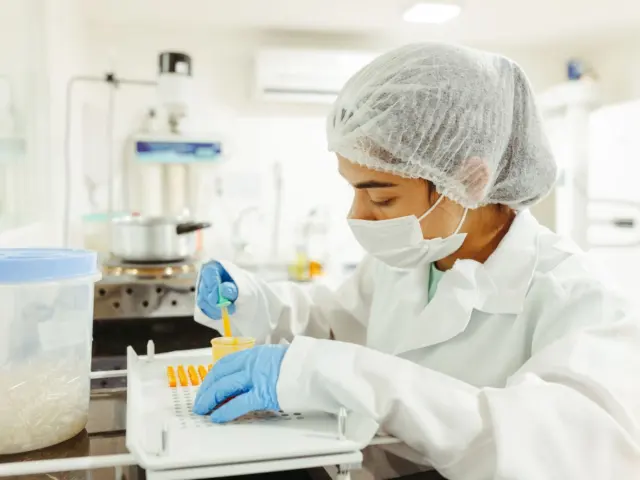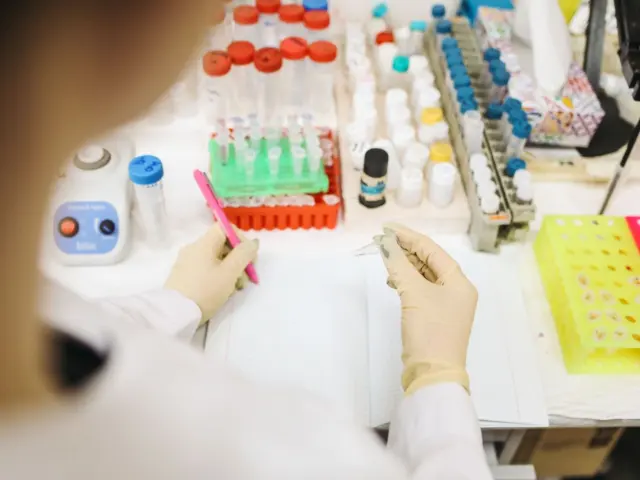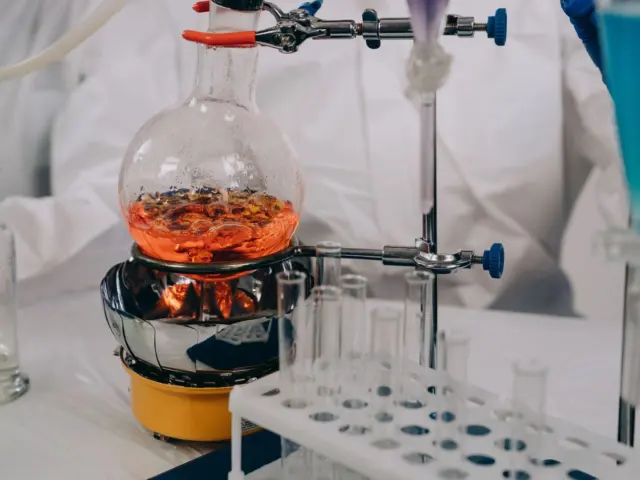
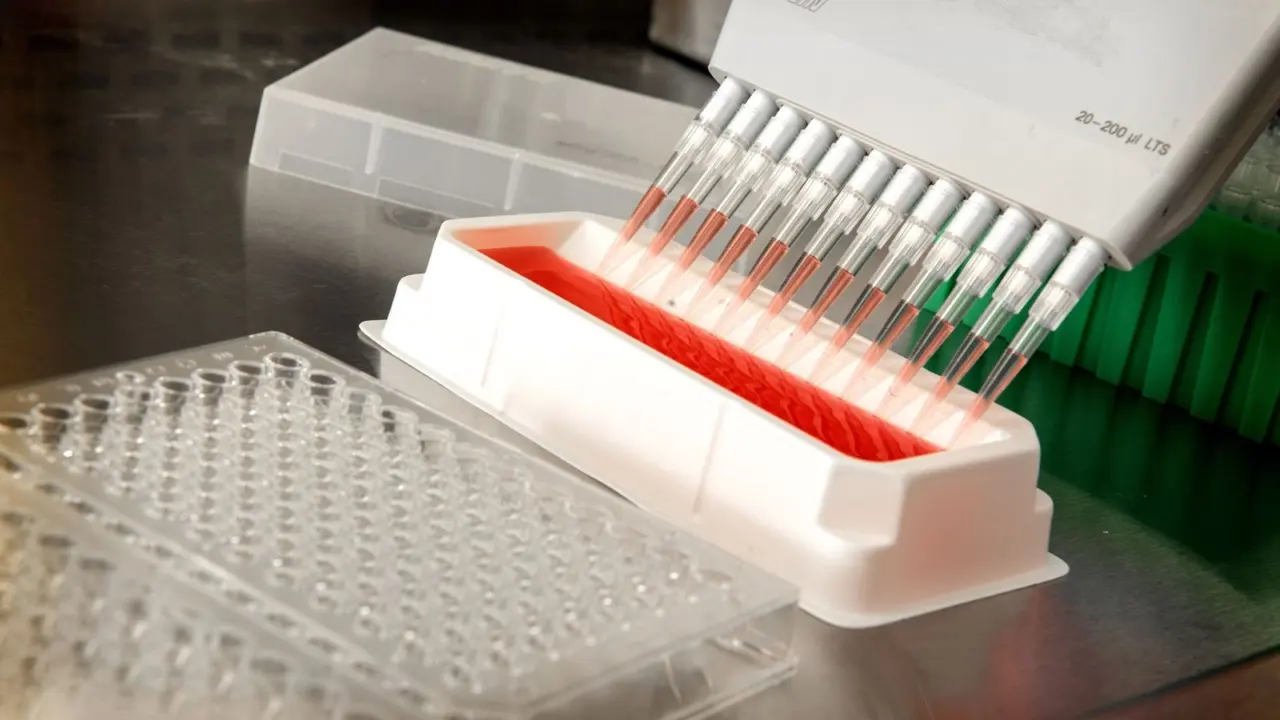
Wondering how researchers sift through huge chemical collections? High throughput screening uses robots, miniaturised plates and automated readers to test very large compound sets quickly against a biological question, then flags a few worth following up.
| Item | Value |
|---|---|
| Public screens analysed in a frequent-hitter study | 872 HTS data sets |
| Minimum compounds tested per screen in that study | 50,000 or more |
| Share of PubChem bioassays those screens represented | approximately 83% as of 24/3/2020 |
| Cell Painting stains | eight cellular components or organelles |
| Possible backup for a fluorescence readout | luminescence or absorbance readout |
The figures come from a Scientific Reports analysis on PubMed Central and a brief guide to hit selection on PubMed Central. Databases and methods change, so check the sources before you rely on them.
This guide is a spoke of our wider overview of what is drug discovery, and it looks at an early step in that chain.
What high throughput screening actually does
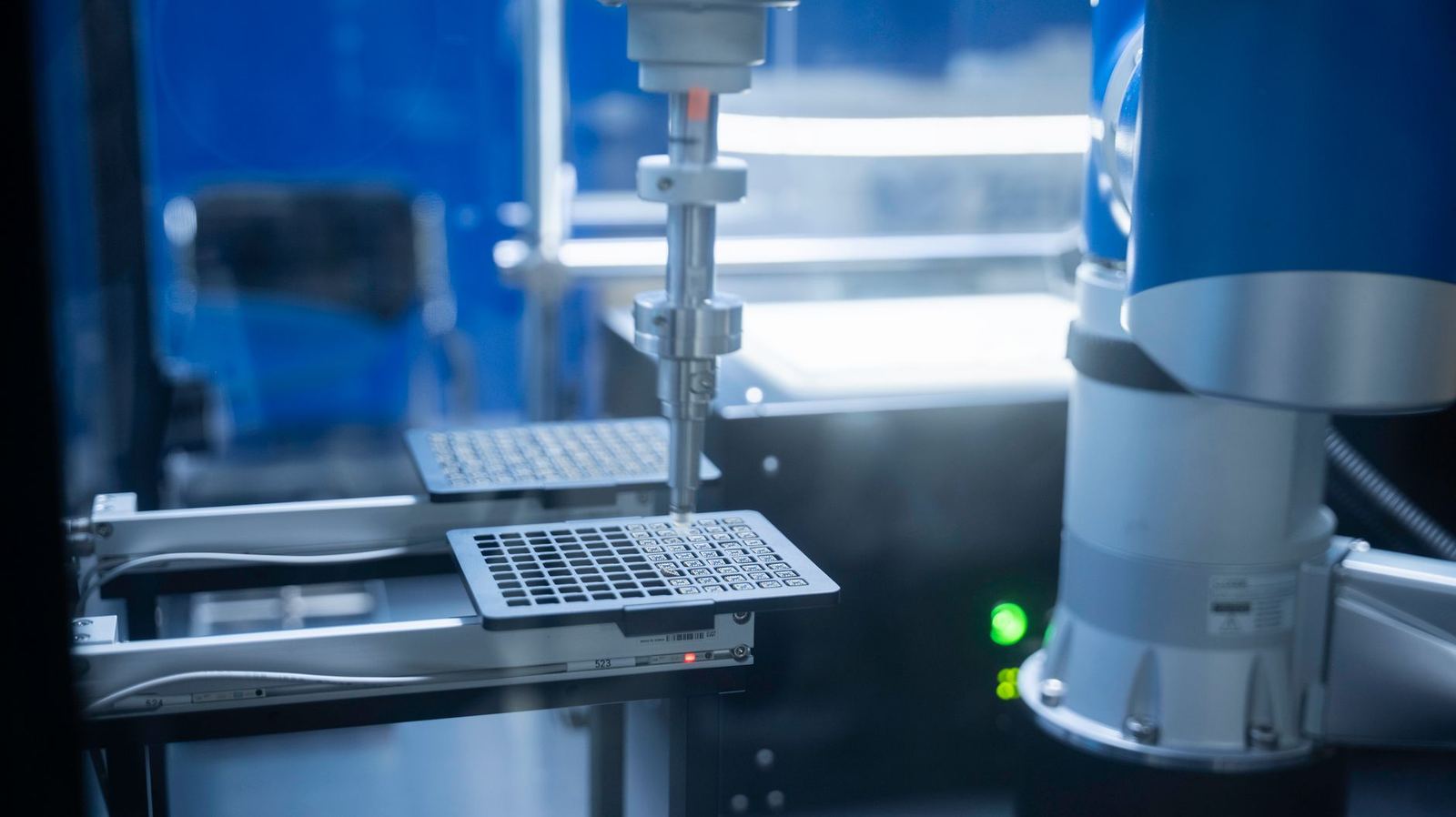
A screen takes a library of small molecules and exposes each one to a target, such as an enzyme or a cell line, in a tiny well on a plate. A detector then records a signal, for example light, that changes if the compound has an effect.
The aim is not to find a medicine. It is to produce a first list of primary hits, compounds that behaved interestingly, which chemists can then study further.
The PubMed Central brief guide describes the output this way: “Screening campaigns initially generate a large set of active compounds (primary hits).”
The main steps of a screening campaign
Campaigns vary, but most follow a similar order of work.
- Assay design: a test is built that gives a clear, repeatable signal and is small enough to run in a plate well.
- Library selection: a collection of compounds is chosen, often with computer filters that drop unwanted structures.
- Automated screening: robots dispense compounds and reagents, and plate readers record the results.
- Data analysis: signals are compared with control wells to call primary hits.
- Hit confirmation: hits are retested, usually across a range of concentrations.
The guide notes a simple rule for the assay step: “Quality in, quality out.” A poorly optimised test tends to produce a poor hit list, however many compounds it handles.
Why primary hits need follow-up
The hardest part comes after the robots stop. The PubMed Central guide says “The most challenging task during the early hit selection phase is to discard false-positive hits and at the same time score the most active and specific compounds.”
Some compounds interfere with the detection method rather than the biology. The guide lists “autofluorescence, signal quenching or enhancing, singlet oxygen quenching, light scattering, and reporter enzyme modulation” as causes of readout interference.
A compound can therefore look active without acting on the target at all. Such assay artefacts are a main reason raw hit lists shrink sharply during follow-up.
How scientists weed out false positives
The same guide describes several experimental filters, used after computer-based flagging of undesirable compounds.
- Dose-response testing: hits are tested over a broad concentration range. The guide states that “Compounds not generating dose-response curves are generally discarded because of lack of data reproducibility.”
- Orthogonal assays: the guide gives the example that a fluorescence-based primary readout “can be backed up by luminescence- or absorbance-based readouts in follow-up analysis.”
- Cellular fitness tests: viability, cytotoxicity or apoptosis assays show whether a compound simply damages cells.
Imaging can add detail here. The guide notes that Cell Painting is “a high-content image-based format for morphological profiling using multiplexed fluorescent staining of eight broadly relevant cellular components or organelles.” Our piece on cell imaging in drug discovery explains how such image-based readouts work.
Frequent hitters and the limits of the data
Some compounds show up as hits again and again across unrelated screens. These frequent hitters, including so-called pan assay interference compounds, have been recognised since the early days of the field.
A Scientific Reports study assessed a statistical model of frequent hitters “using 872 publicly available HTS data sets.” Its authors report that the data sets all “contained tests on 50,000 or more compounds.”
The result is a useful caution. The authors state that “Aggregating the testing information from each compound across the multiple screens yielded a continuum with no clear boundary between normal and frequent hitting compounds.”
The same paper observes that the public data characterise “the assays well by challenging them with many compounds while each compound is characterized poorly with a single assay.” Most compounds are tested in only one setting, which limits what can be inferred about them.
What screening can and cannot tell you
Screening is good at narrowing a very large chemical space to a manageable shortlist. It is a filter, not a verdict.
- It can show that a compound changes a signal in a particular test.
- It cannot show that a compound would be safe or effective in people.
- Its results depend heavily on how well the assay mirrors the real biology.
- Hits still need chemical optimisation, and many are dropped along the way.
Compounds that survive move into later laboratory and animal studies, and only a small fraction ever reach human trials. Regulators then judge any candidate on separate evidence, as our overview of the ema drug approval process describes.
A Nature review of computational approaches points to a shift driven by “on-demand virtual libraries of drug-like small molecules in their billions.”
Nothing in a screening result is a guide to personal health. If you have questions about a medicine or a health condition, talk to your doctor or pharmacist rather than relying on a research paper.
Practical points when reading screening claims
News about a “large screen” can sound more decisive than it is. A few questions help you read such claims with care.
- Was the hit confirmed? A primary hit that was never retested in a dose-response experiment is weak evidence.
- Was an orthogonal readout used? Agreement between different detection methods makes interference less likely.
- Was cell health checked? A compound that only damages cells can mimic a useful effect in a cell-based assay.
- How was the assay validated? The guide’s phrase “Quality in, quality out” applies to the whole pipeline.
Treat any single screening result as an early, provisional observation. Reproducibility across independent experiments is what moves a compound from a curiosity to a candidate for further study.
Frequently asked questions
Is high throughput screening the same as drug discovery?
Show answer
No. It is an early step that produces starting points. Later stages of chemistry, safety testing and clinical study are needed before any candidate could be considered for approval.
Why are so many hits false positives?
Show answer
Many compounds interfere with the detection method, for example through autofluorescence or light scattering, rather than acting on the target. Follow-up tests are designed to catch these.
What is a counter screen?
Show answer
It is a test that checks whether a compound produces the signal for reasons unrelated to the intended target, helping to remove artefacts from the hit list.
What is a frequent hitter?
Show answer
It is a compound that appears active in many different screens. An analysis of 872 public data sets found no clear boundary between normal and frequent hitters.
This article is for information only. It is general education about science and the drug industry, and it is not medical, treatment or investment advice.