Wondering how far you can trust a score from ADMET prediction machine learning tools? They can help rank molecules early, but their outputs are estimates with real uncertainty, not measurements.
For the wider context, see our overview of how ai is used in drug discovery.
| Item | Value |
|---|---|
| ADMET stands for | Absorption, distribution, metabolism, excretion and toxicity |
| Failures due to lack of efficacy, Phase II (2011-2012 data) | 59% |
| Failures due to lack of efficacy, Phase III and beyond | 52% |
| Failures due to safety, Phase III and beyond | 35% |
| Failures due to safety, Phase II | 22% |
The attrition figures come from Nature Reviews Drug Discovery, and the ADMET definition from a PubMed Central review. Figures can change, so check the sources before you rely on them.
What ADMET prediction is trying to do
ADMET describes what happens to a compound in the body: how it is absorbed, where it goes, how it is metabolised, how it is cleared and whether it is toxic. A PubMed Central review calls the evaluation of these properties a “critical bottleneck in drug discovery and development, contributing significantly to the high attrition rate of drug candidates.”
Machine learning tries to estimate these properties from a molecule’s structure before anyone makes it. The aim is to help teams deprioritise compounds that look likely to behave badly, so lab effort goes elsewhere.
It is a triage aid. A prediction does not replace an assay, and it says nothing about whether a compound would work in people.
How the models work
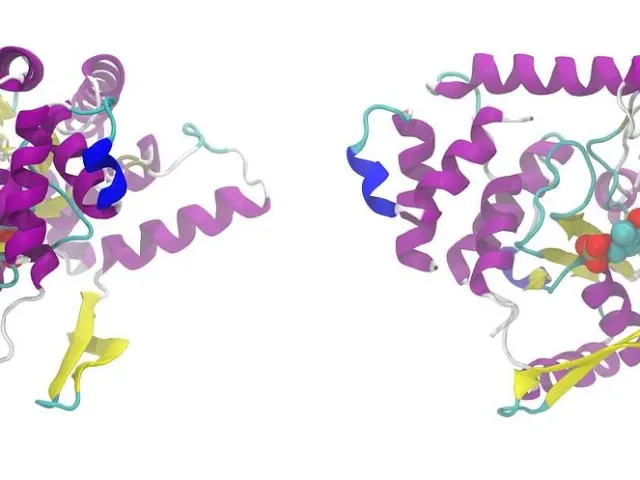
Most models are supervised: they learn from compounds with measured results and then predict for new ones. The same review lists common algorithms as “support vector machines, random forests, decision trees, and neural networks.”
The main design choice is how a molecule is represented. Typical options include:
- Calculated descriptors, such as simple counts and physicochemical properties, fed to classic algorithms.
- Fingerprints that encode which substructures are present.
- Graph representations, where, in the review’s words, atoms are nodes and bonds are edges.
Graph-based neural networks learn task-specific features directly from structure. The review reports that graph convolutions “have achieved unprecedented accuracy in ADMET property prediction,” though accuracy on a benchmark does not guarantee accuracy on your own chemistry.
Where the numbers come from: data and its limits
A model is only as good as its training data. The review lists data quality, algorithm transparency and regulatory acceptance among the challenges that persist.
Measured ADMET values come from different labs, protocols and assay conditions, so merged datasets can be noisy. Public sets are also biased toward compounds that someone chose to test, a theme we cover in machine learning bias in drug discovery data.
Class imbalance is another problem. The review names data imbalance and interpretability as key challenges.
Uncertainty: when to doubt a prediction
Every prediction carries uncertainty, and the uncertainty is not the same for every molecule. A model usually does best on compounds resembling its training set and worse on new scaffolds.
Practical signs that a score deserves caution:
- The molecule is structurally far from anything in the training data.
- The tool gives a single number with no confidence range.
- Reported performance comes from a random split rather than a split by scaffold or by time.
- Different models disagree on the same compound.
The review also notes that a lack of interpretability “can pose challenges for researchers and regulatory authorities in relying on AI and ML-driven predictions.” A black-box score is harder to question than one tied to a recognisable structural reason.
Reading reported performance
Papers usually report an error measure, such as root mean squared error for continuous values or a classification score for yes/no endpoints. These summaries average over many compounds, so they hide the cases where the model is badly wrong.
How the data were split matters as much as the metric. A random split lets near-identical molecules appear in both training and test sets, which tends to flatter the result.
It also helps to ask which endpoint is being predicted.
- Check whether the test set resembles the compounds you care about.
- Look for error ranges, not only a single average score.
- Prefer results that were validated on data the developers never touched during tuning.
Why early filtering has limits
ADMET problems are only part of why candidates fail. In a Nature Reviews Drug Discovery analysis of 2011-2012 attrition, lack of efficacy accounted for 59% of failures in Phase II and 52% in Phase III and beyond.
The same analysis found safety issues were higher in later stages, at 35% in Phase III and beyond versus 22% in Phase II. The authors suggest this “may be due to safety issues that only become apparent in larger numbers of patients and/or longer trials.” Such effects are hard for any early model to foresee.
These figures are dated, and they do not isolate how much ADMET prediction could have prevented. Treat them as context, not a forecast.
Single-task and multi-task models
Some models predict one endpoint at a time, while multi-task models learn several related endpoints together.
The PubMed Central review describes transfer approaches that use source datasets such as Tox21, ToxCast, SIDER, HIV and BACE to share knowledge between related tasks. The approach described in the review demonstrated improved performance in target tasks.
Whichever design is used, the same questions apply: what data trained it, how it was tested, and how far from that data the new compound sits.
Using predictions responsibly
Teams generally treat predictions as one input among several, checked by experiments. New structures proposed by generative systems raise the same issue, as discussed in generative ai molecule design, because these molecules may lie outside any model’s training range.
This article is educational only. It does not give medical advice, and anyone with questions about a medicine or its safety should speak to a doctor or pharmacist.
Good reporting includes the dataset, the split method, the error measure and a statement of where the model should not be used. Without them, a headline accuracy figure says little.
What a sensible workflow looks like
In practice, a prediction is usually the first filter, not the last. A team might score a large list of candidate structures, set aside those flagged as risky, and send the rest for laboratory testing.
The laboratory results then feed back into the model as new training data.
The review’s own conclusion is cautious in tone: it says continued integration of machine learning with experimental pharmacology holds the potential to improve efficiency and reduce late-stage failures. That is a statement of potential, and the evidence for any single tool should be read on its own terms.
Frequently asked questions
Can machine learning replace ADMET lab experiments?
Show answer
Not on current evidence. The models estimate properties for triage, and experimental results are still needed to confirm them.
Which algorithms are used?
Show answer
Reviews list support vector machines, random forests, decision trees and neural networks, including graph-based networks that treat atoms as nodes and bonds as edges.
Why do predictions fail on new compounds?
Show answer
Models learn patterns from past data. A molecule unlike the training set falls outside what the model has seen, so its error is usually larger.
Does good ADMET prediction mean a drug will succeed?
Show answer
No. Lack of efficacy was the largest cause of clinical failure in the 2011-2012 analysis, and ADMET scores do not address it.
This article is for information only. It is general education about science and the drug industry, and it is not medical, treatment or investment advice.