Wondering how scientists identify and measure many proteins at once? Proteomics explained simply: proteins are cut into peptides, weighed by a mass spectrometer, and matched against databases to work out what was in the sample.
This guide is part of our wider series on what is biotechnology.
| Item | Value |
|---|---|
| Strategy | Shotgun (bottom-up) proteomics |
| Typical instrument workflow | Fractionation followed by LC-MS/MS |
| Most common protease | Trypsin |
| Tryptic peptides that are 6 amino acids or shorter | 56% |
| Plasma proteins approved by the FDA as biomarkers | Around 100 |
Figures come from a recent tutorial review in PubMed Central and a plasma proteomics study hosted by the NIH library. Methods and numbers can change, so check the sources before you rely on them.
What proteomics measures
Proteomics is the large-scale study of proteins. According to an NIH-hosted review, it covers efforts to identify and quantify the proteins of a proteome, including expression, localization, interactions and modifications, which makes it more challenging than sequencing a genome.
Unlike a genome, a proteome changes with time, location and cell type. That is why a single experiment is a snapshot, not a full portrait of a cell.
The field is useful in basic research because proteins carry out most of the work in cells. Measuring them directly can show things that DNA or RNA readouts only hint at, such as chemical modifications that switch a protein on or off.
How mass spectrometry identifies proteins
In the common bottom-up approach, proteins are digested into peptides before analysis. When this is done on a mixture of proteins it is called shotgun proteomics, a name coined by the Yates lab because of its analogy to shotgun genomic sequencing (review).
- Proteins are extracted from cells, tissue or fluid.
- An enzyme, usually trypsin, cuts them into peptides.
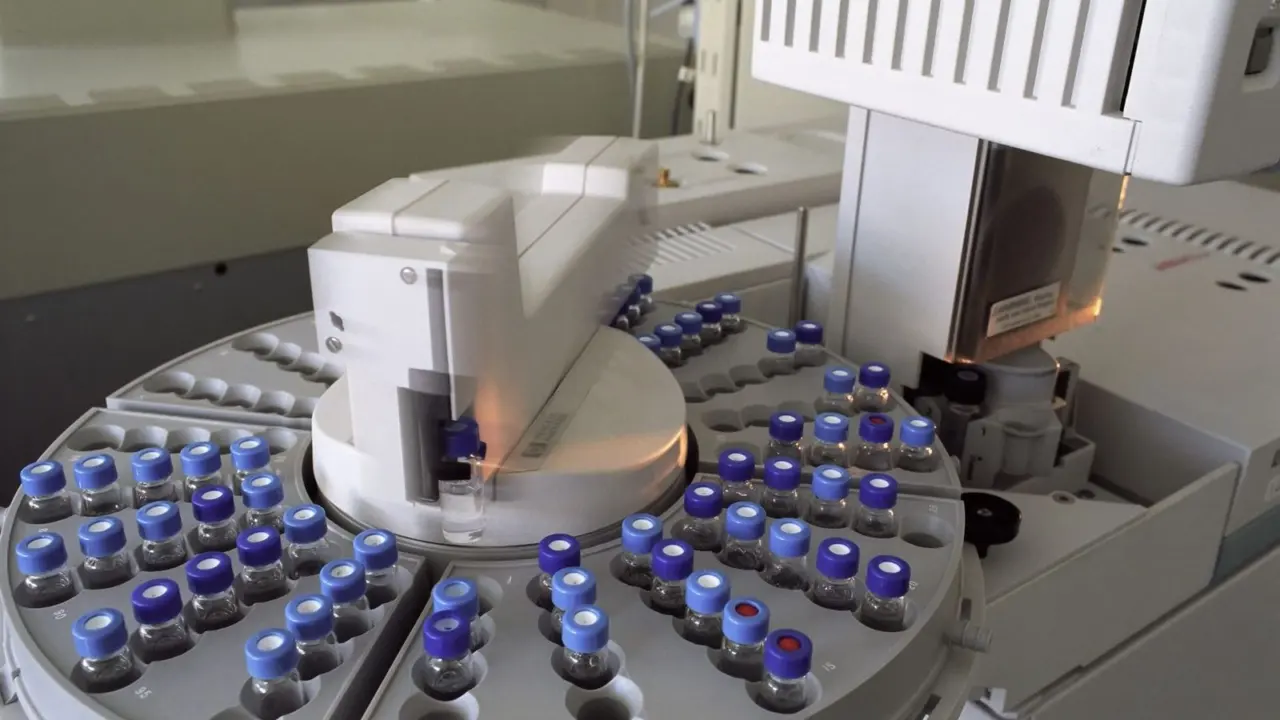
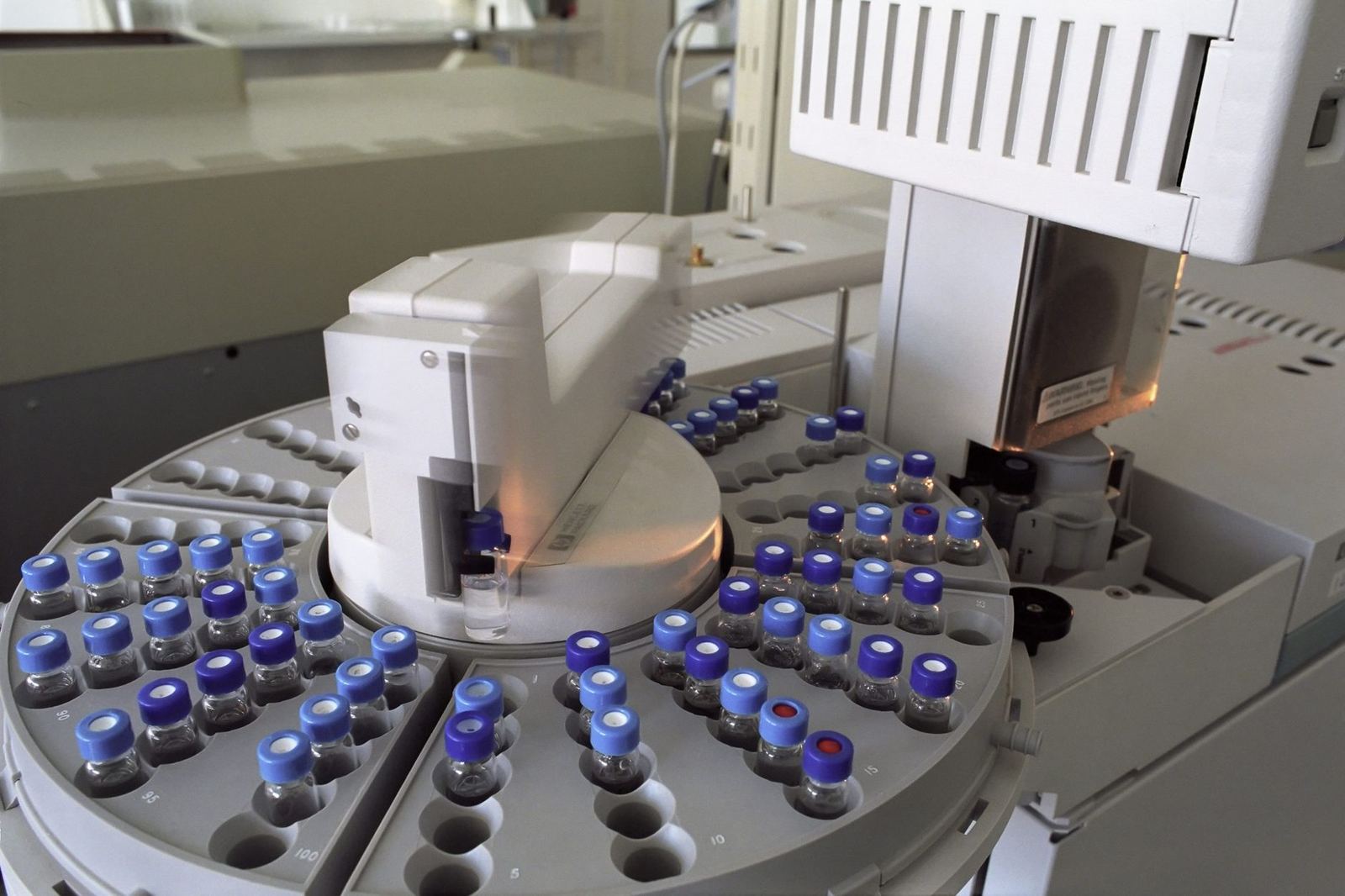
- The peptide mixture is fractionated and run through LC-MS/MS, which pairs liquid chromatography with tandem mass spectrometry.
- Measured fragment spectra are compared with theoretical spectra from an in silico digest of a protein database.
- Matched peptides are assembled back into a list of likely proteins.
Enzyme choice matters at step two. The tutorial review says many peptides generated by trypsin are appropriate in length and hydrophobicity for chromatographic separation, fragmentation and identification by database search, and that trypsin is a sufficient choice for most proteomics experiments (review).
Because the instrument sees peptides and not whole proteins, the software must infer which protein each peptide came from. This inference is one source of uncertainty, since a peptide shared by several proteins cannot point to just one.
A good way to picture the process is a shredded document. Each strip is read and matched against a library of known texts, and the original is reconstructed from the best matches, with some strips left unreadable or ambiguous.
The matching step relies on statistics. The tutorial review notes that analysis moved from ad hoc empirical methods to models based on false discovery rate (review).
This computational side overlaps heavily with the field covered in what is bioinformatics, since search engines, databases and statistics decide which peptides are called as identified.
Bottom-up versus top-down
Top-down proteomics attempts to measure intact proteins. Its potential benefit is the ability to measure the many varied proteoforms, but the depth of coverage is considerably less than bottom-up (review).
The older review explains why bottom-up is more widely adopted: peptides are more easily fractionated, ionized and fragmented than whole proteins (review). Its authors expect shotgun methods to be increasingly combined with top-down ones.
In practice, many labs treat the two as complementary. Bottom-up gives breadth across a sample, while top-down has the potential to measure varied proteoforms.
What the method cannot do well
Bottom-up proteomics measures proteins indirectly, through peptides. The NIH-hosted review describes shotgun proteomics as an indirect measurement of proteins through peptides derived from proteolytic digestion, so information about the intact molecule can be lost.
- Short peptides: the tutorial review says peptides that are too short may match many proteins during protein inference.
- Enzyme bias: the majority (56%) of tryptic peptides are 6 amino acids or shorter, so trypsin alone limits the observable proteome (review).
- Dynamic range: in phosphoproteomics, challenges still include limited sample amounts, highly complex samples and wide dynamic range.
- Low-abundance proteins: the older review notes significant shortcomings remain even after depleting the most abundant proteins (review).
These limits shape how results should be read. A list of identified proteins is the output of a chain of choices: sample preparation, enzyme, separation, instrument settings, database and statistical threshold.
Changing any one of those choices can change which proteins appear. That is why careful readers look for follow-up experiments that confirm a finding by a different method.
Results are therefore estimates with error rates, not complete inventories. Any single experiment may miss real proteins and occasionally report wrong ones.
Blood plasma: a hard test case
Blood plasma shows the limits clearly. A plasma study notes that its wide dynamic range of protein abundances and time-consuming procedures keep plasma proteomics challenging (study).
The same paper says thousands of proteins have been measured in plasma or serum, yet only around 100 plasma protein biomarkers have been approved by the FDA. That gap shows how far a measurement is from a validated clinical test.
Another study reports that the wide dynamic range and high complexity of plasma have often led to unacceptable tradeoffs between depth of coverage and sample throughput (study).
The NIH-hosted review calls protein dynamic range the largest challenge facing proteomics technology development (review). It describes two main adjustment approaches: selective depletion of known high-abundance proteins, and equalization using combinatorial ligand libraries.
Depletion has costs of its own. The review says that depletion capacity can limit the starting mass of low-abundance proteins.
It also says plasma protein expression can vary by up to 12 orders of magnitude. In plain terms, a few very abundant proteins can drown out rare ones that might matter most for a research question.
Researchers therefore report how many proteins they quantified and with what variability. Readers should treat headline protein counts cautiously, because counts depend on the sample, the instrument time and the cut-offs used to accept an identification.
This page is educational only. Questions about any personal health test belong with a qualified physician or other health professional, not with a proteomics explainer.
How proteomics sits beside other tools
Proteomics sits alongside genomic tools. Techniques described in mrna technology explained work at the RNA level, while mass spectrometry looks at the proteins that result, which may not track RNA levels closely.
Combining several readouts is common in research, because each one has blind spots. None of them replaces careful experimental design and independent validation.
Frequently asked questions
What is shotgun proteomics?
Show answer
It is bottom-up proteomics applied to a mixture of proteins, which are digested into peptides and analysed by LC-MS/MS.
Why is trypsin used so often?
Show answer
The tutorial review says trypsin is favoured for its specificity, availability, efficiency and low cost.
Is top-down proteomics better?
Show answer
It has the potential to measure varied proteoforms, but the review reports considerably less coverage depth than bottom-up, so the approaches are complementary.
Can proteomics find every protein in a sample?
Show answer
No. Sample complexity, dynamic range and low-abundance proteins limit what any one experiment detects.
This article is for information only. It is general education about science and the drug industry, and it is not medical, treatment or investment advice.