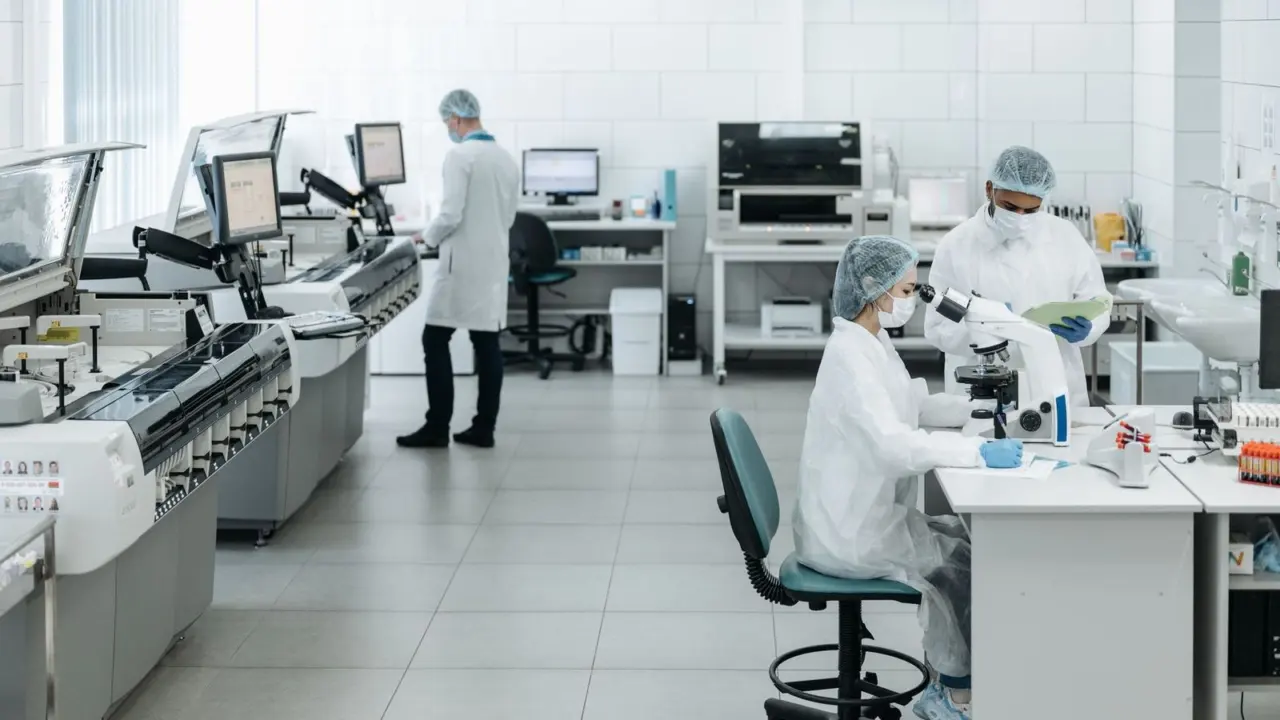
Wondering how labs read millions of DNA fragments at once? Next generation sequencing explained simply: instruments copy and read huge numbers of short pieces in parallel, then software reassembles them.
This guide is part of our wider series on what is biotechnology.
| Item | Value |
|---|---|
| Assumed human genome size in NHGRI cost estimates | 3,000 Mb |
| Size of one megabase | A million bases |
| Start of NHGRI’s sequencing cost data | 2001 |
| Equipment amortization in NHGRI cost estimates | Three years |
| Time NGS methods have been evolving, per a PubMed-indexed review | Past 15 years |
Figures come from the NHGRI sequencing cost data page and a PubMed-indexed review. They can change, so check the sources before you rely on them.
What is next-generation sequencing?
Next-generation sequencing (NGS), also called high-throughput sequencing, reads very large numbers of DNA fragments at the same time. Older methods read one fragment per reaction, which made large projects slow and costly.
A review on PubMed states that “High throughput DNA sequencing methodology (next generation sequencing; NGS) has rapidly evolved over the past 15 years and new methods are continually being commercialized.” The label “next-generation” is therefore a moving target rather than one fixed technology.
How does the process work step by step?
A general way to understand sequencing is to separate preparation, measurement and interpretation. This outline describes the purpose of those stages rather than a laboratory protocol. The supplied review describes methods as evolving, so a broad introduction should not be read as a set of instructions for every instrument.
- Library preparation: the aim is to prepare the DNA material for the chosen sequencing method. To understand a particular study, look for its description of what material was used and how it was prepared. The name of a preparation stage alone does not explain those choices.
- Preparing for measurement: the material needs to be suitable for the method used to read it. Details belong in the procedure for that method; this overview does not establish which preparation steps a particular instrument requires.
- Sequencing: high-throughput DNA sequencing is intended to obtain sequence information at scale. Keep the act of measuring sequence separate from the later question of what that sequence means for the research.
- Data analysis: the aim is to organize and examine the resulting sequence information. When reading a study, ask how the analysis relates to its stated question and whether the authors explain the assumptions behind their conclusions.
- Interpretation: the aim is to decide what the observations support. A useful explanation distinguishes the data obtained, the conclusion drawn from them and any questions left unanswered. These are related parts of a study, but they are not interchangeable.
For a specific workflow, read the methods and quality criteria alongside the results. Ask what was measured, what was checked and what the authors consider a limitation. The general label NGS does not, by itself, provide that information or establish how well an individual study answered its question.
Short reads, long reads and what each does well
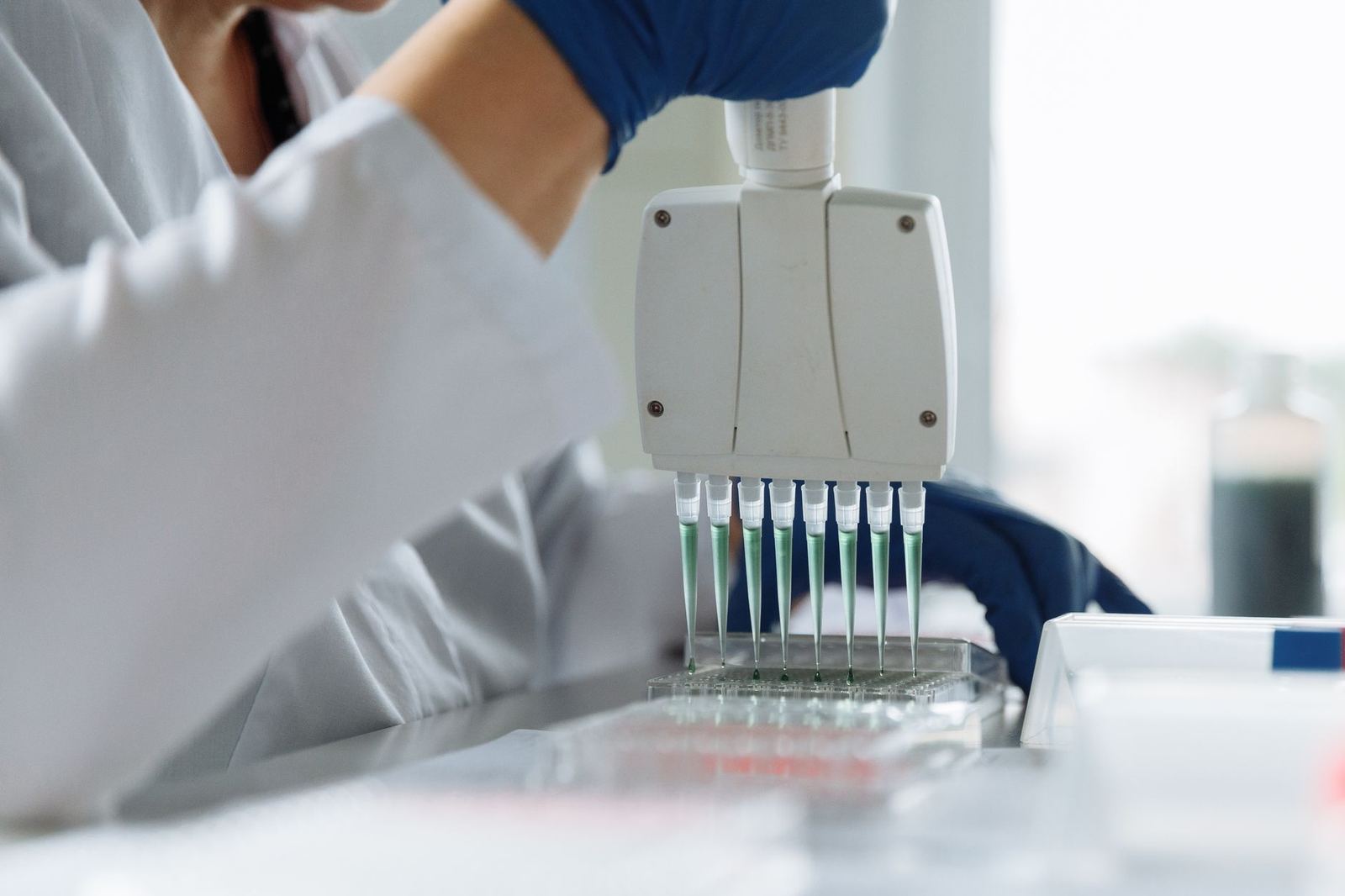
The choice of read length shapes what a project can see. A read is simply the stretch of sequence an instrument reports from one fragment, and longer reads carry more context.
The same core idea underpins related methods. For example, single cell rna sequencing explained shows how sequencing is applied to RNA from individual cells.
How much does sequencing cost?
The US National Human Genome Research Institute (NHGRI) tracks sequencing costs reported by centers it funds. Its data begin in 2001 and are expressed as cost per megabase and cost per genome, according to the NHGRI cost data page.
The page explains that the per-genome graph uses an assumed genome size of 3,000 Mb, so it is an estimate rather than the actual cost of specific projects. It counts production costs such as labor, reagents, consumables and equipment amortized over three years.
What NGS cannot do and where it goes wrong
Sequencing produces data that need interpretation. A measurement and an explanation of its meaning are different things. The supplied evidence describes sequencing at scale, but it does not establish the accuracy or clinical usefulness of a particular result.
- Measurement quality: ask what evidence supports the reliability of the reported sequence. NHGRI’s cost description refers to DNA sequence of a specified quality; a cost figure alone does not tell you whether a particular result is reliable.
- Scope: ask what material and questions the study actually examined. Avoid extending a conclusion to something the study did not assess. A broad technology label is not a substitute for a clear account of the work performed.
- Meaning: distinguish an observation from a claim about its biological or medical importance. If the report does not establish that meaning, leave the question open rather than assuming that a sequence result supplies an answer.
Nothing here is medical advice. Clinical use of sequencing results belongs with qualified professionals and regulated laboratories.
Why scale changes what researchers can ask
A review in Cold Spring Harbor Perspectives in Medicine, hosted on PubMed Central, notes that “As genome-scale sequencing has become routine, a paradigm shift is occurring in genomics, which uses the power of high-throughput, rapid sequencing power with large-scale studies.”
Scale brings new questions. Researchers can compare many samples at once, look for rare variants across large groups, or track how a microbial community changes over time.
It also brings new statistical risks. With enormous numbers of comparisons, some apparent patterns arise by chance, so careful study design and replication matter.
Common uses, described neutrally
NGS appears in many research settings. The list below is descriptive only and does not imply that any approach suits a particular person or situation.
- Whole-genome sequencing.
- Targeted panels.
- RNA sequencing.
- Metagenomics.
Each choice trades breadth against depth. Reading everything shallowly can miss rare changes, while reading a few genes deeply cannot reveal what lies outside them.
Reading a sequencing claim critically
News about sequencing often compresses nuance. A few questions help you judge a claim.
- Does a quoted price describe reagents only, or the full workflow? NHGRI’s own page limits its figure to production costs.
- How deep was the coverage, and was it validated by a second method?
- Was the variant confirmed, or only predicted by software?
- Is the result a research finding, or has it passed regulatory and clinical validation?
Independent replication is another useful signal. A finding reproduced by different groups, using different instruments or pipelines, is generally more dependable than a single report.
Answers to these questions separate a solid result from a preliminary one. Where details are missing, treat the claim as unproven.
Where does NGS connect with other tools?
To place sequencing alongside another biotechnology topic, see the introduction to crispr gene editing explained. When comparing methods, start with the question each is intended to address. A connection between topics does not establish that a particular experiment used both methods or that combining them produced a useful result.
Apply the same care to claims that connect sequencing with computational tools or drug discovery. Ask what evidence is supplied for the proposed connection, what conclusion it supports and what remains to be tested. The facts collected here support a general description of high-throughput sequencing and its evolving methods. They do not establish the performance of a particular computational model or a drug discovery application.
Frequently asked questions
Is next-generation sequencing the same as whole-genome sequencing?
Show answer
No. NGS is a family of technologies. Whole-genome sequencing is one way to use it, alongside targeted panels and exome sequencing.
Why is it called “next-generation”?
Show answer
The term was coined to distinguish parallel methods from earlier one-fragment-at-a-time approaches. As methods keep evolving, the label is used loosely.
Does the cost-per-genome figure include everything?
Show answer
NHGRI describes its figure as an estimate for a human-sized genome rather than the actual cost of a specific genome-sequencing project.
Is NGS perfectly accurate?
Show answer
No. Errors, coverage gaps and ambiguous regions occur, so results are usually checked and interpreted by specialists.
This article is for information only. It is general education about science and the drug industry, and it is not medical, treatment or investment advice. Decisions about diagnosis, testing or treatment belong with a doctor or another qualified health professional.