Trying to make sense of biologics vs small molecule drugs? The core difference is size and origin: small molecules are compact, chemically made compounds, while biologics are large molecules produced by living cells.
This guide sits within our wider explainer on what is biotechnology, and looks at the two drug classes side by side.
| Item | Value |
|---|---|
| Typical small-molecule size | below 500 Da, with oral bioavailability |
| Biologic origin | large molecules from living cells |
| Generic drug production | chemically synthesized exact copies |
| Biosimilar standard | “highly similar” to the reference product |
| Biologics share of FDA approvals, 2018-2024 | 29% (102 of 352) |
| Biologics share of FDA approvals, 2025 | 26% (12 of 46) |
Figures come from a PubMed-indexed review of peptide drugs and a PubMed Central analysis of FDA approvals. They can change, so check the sources before you rely on them.
What separates the two classes?
The split starts with molecular size. A review in the peptide-drug literature describes traditional “small molecule” drugs as having typical molecular weights of <500 Da but with oral bioavailability, set against much larger biologics.
That size gap shapes almost everything else. Small molecules are usually made by chemical synthesis in a reactor. Biologics are made by engineered living systems, which is why the field is so closely tied to modern biotechnology.
- Small molecules: compact, chemically defined structures, often designed to be swallowed as tablets or capsules.
- Biologics: proteins such as antibodies and related products, grown in cells and purified.
- In between: peptides sit at the boundary, and researchers have explored them as a way to combine traits of both classes.
How are they made?
Chemists build a small molecule step by step, and the finished compound can be fully described. A PubMed Central practice review notes that generic drugs are small-molecule agents, synthesized chemically to be exact copies of brand-name medications in every respect.
Biologics follow a different route. The same review says biologics are large-molecule drugs originating from living cells and complex biotechnologic processes.
A cell line is engineered, grown, and the target protein is harvested and purified.
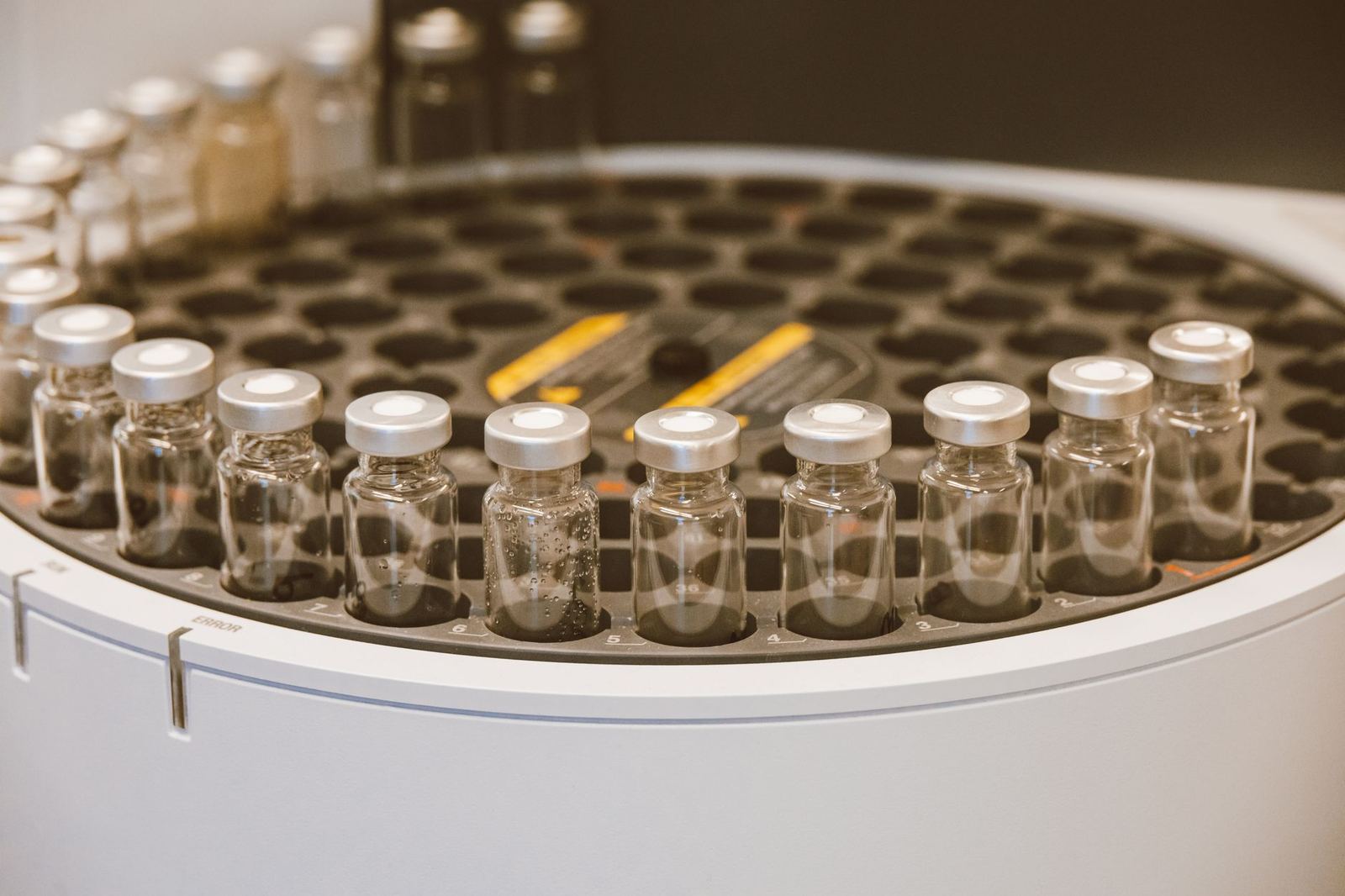
Small-molecule manufacturing has its own challenges, such as impurities, solubility and stability. But the final compound can usually be identified with standard chemical analysis, which makes comparison more direct.
Why does structure matter for variability?
A chemically made compound can be reproduced essentially identically from batch to batch. A protein is more variable by nature. The same review table describes biosimilars as molecules with minor natural structural heterogeneities that are sensitive to storage and handling conditions, a description that applies broadly to protein products.
This is why regulators and manufacturers monitor biologics closely. Variation within a product is something manufacturers need to understand, because it may affect the parts of the molecule that matter.
Researchers also study how proteins fold and interact. For a related topic, see the explainer on organoids in drug discovery.
How does regulation treat copies?
Copies of small molecules and copies of biologics are judged differently. A generic must match the original chemical. For biosimilars, the standard is similarity: the same review’s table defines a biosimilar as a “highly similar” version of a single FDA-licensed biologic.
The same table says biosimilars are reverse-engineered from an original biological product for which the proprietary formulation is unavailable to the biosimilar sponsor. It adds that substantive evidence based on analytical similarity, with a focus on biological functionality, can provide the rationale for reducing the amount of preclinical and clinical data required.
This is a regulatory design choice, not a shortcut around safety. The aim is to avoid repeating work that has already been done, while still checking that the copy behaves like the original.
Decisions about which medicine is right for a person belong with a physician or pharmacist, and this site cannot advise on them.
For readers following the science, the practical lesson is that “copy” means something different in each class. For a small molecule it means the same structure. For a biologic it means a documented, evidence-based match to a product that is itself slightly variable.
What can and cannot each class do?
Each class has strengths and limits. Neither is better in general, and the right modality depends on the biological target.
- Small molecules can often cross cell membranes and reach targets inside cells, and may suit oral dosing. They can also bind unintended targets, which is one source of side effects.
- Biologics tend to be highly specific for their targets, but their size generally limits them to targets outside cells or on cell surfaces, and the body may react to them as foreign.
- Both face high failure rates in development, and early laboratory promise often does not carry through to human studies.
Gene-based tools add a third category beyond this simple split; for context see crispr gene editing explained.
Delivery follows from these traits. Small molecules may be designed with tablet or capsule dosing in mind, whereas large proteins are generally broken down or poorly absorbed in the gut and are often given by injection or infusion. That affects convenience, where a product can be used, and the practical cost of care, though price depends on many other factors.
How common are biologics among new drugs?
Small molecules still make up the larger share of new drug approvals, but biologics are a substantial minority. A PubMed Central analysis of FDA approvals reports that during 2018-2024 biologics accounted for 29% of all approved drugs (102 out of 352), whereas in 2025 they represent 26% (12 out of 46).
The same paper says the 2025 biologics comprised monoclonal antibodies, antibody-drug conjugates and proteins. A single year is a small sample, so year-to-year shifts should not be read as a lasting trend.
Computational methods, including machine learning, are being applied to both classes. They do not remove the need for laboratory and clinical testing.
Frequently asked questions
Is a biologic just a large small molecule?
Show answer
No. Biologics are produced by living cells and are far larger and more variable than chemically synthesized compounds, so they are made and characterized differently.
Why are most biologics not taken by mouth?
Show answer
Their large size and protein nature generally prevent the oral bioavailability that typical small molecules have, according to the PubMed review cited above. Many are therefore given by other routes.
Can a biosimilar be an exact copy of a biologic?
Show answer
The cited review defines a biosimilar as a “highly similar” version of a single FDA-licensed biologic.
Do biologics make up most new drugs?
Show answer
Not in the data cited here. Biologics were 29% of approvals in 2018-2024 and 26% in 2025, according to one PubMed Central analysis.
This article is for information only. It is general education about science and the drug industry, and it is not medical, treatment or investment advice.